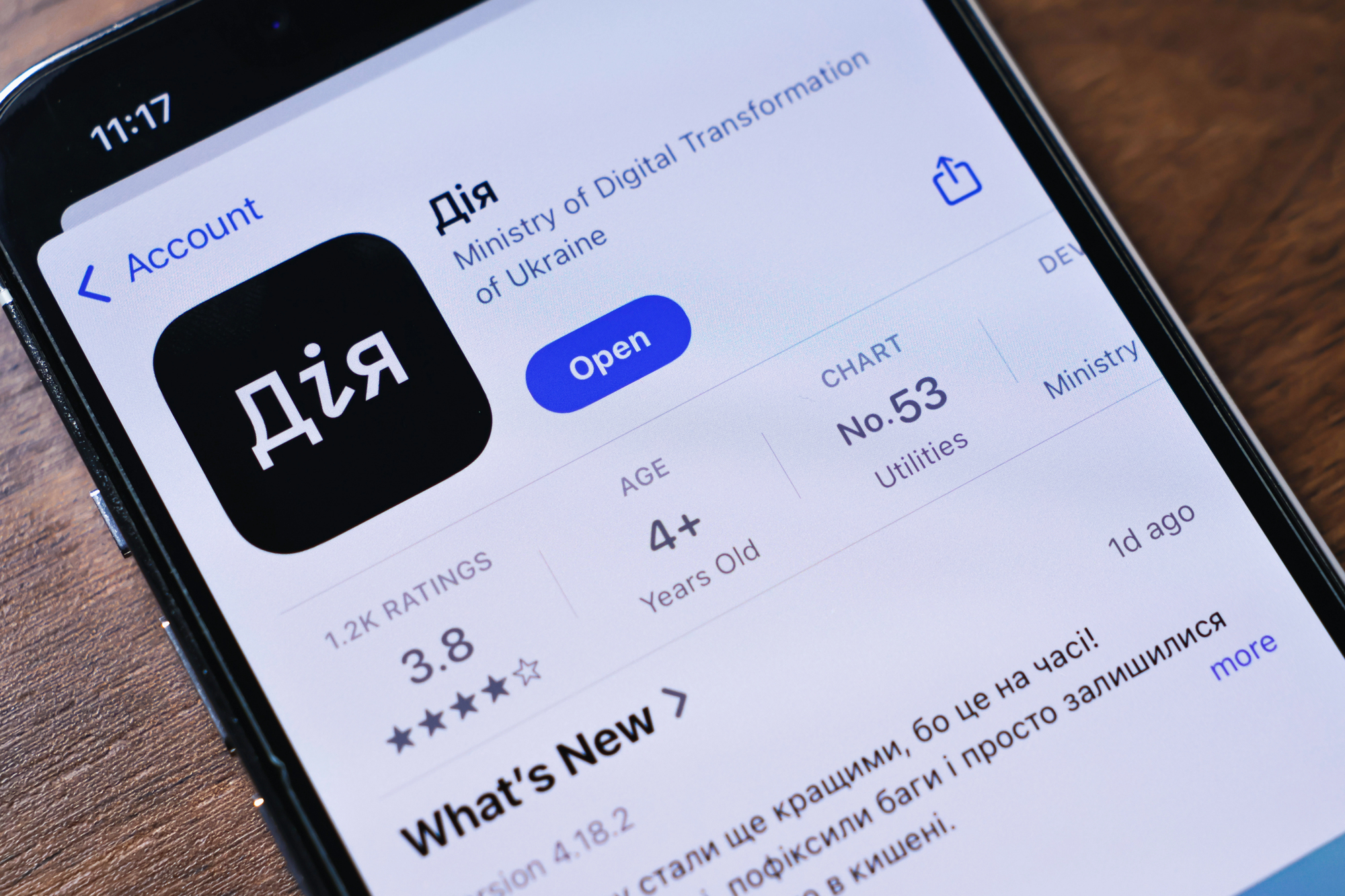
Over 24 million Ukrainians use the Diia application, and nearly 7 million more use the portal. The Ministry of Digital Transformation has published statistics on the most popular services in 2026. Given that Ukraine's total adult population is approximately 30-35 million people (accounting for wartime migration), this figure means that every other adult who remains in the country or maintains contact with the state from abroad has the application on their phone.
What people actually open in Diia
The most popular transactional service became online vehicle re-registration. In 2026, over 76,000 vehicle purchase and sale transactions were processed through the application. The scheme is simple: the seller creates an application, the buyer confirms it via QR code or link, and the technical passport arrives by mail. No queues at the Interior Ministry service center — provided it's a transaction between individuals.
Among social services, eChild (єМалятко) leads — a comprehensive service for a newborn. Parents receive up to 9 government services simultaneously with a single application: birth registration, residence registration, benefit assignment. According to the Ministry of Digital Transformation, over 600,000 Ukrainian families used the service. From January 1, 2026, the one-time payment for a child's birth increased to 50,000 hryvnias — and the vast majority of registrations occur through Diia.
The financial programs block is also growing actively. As of early 2026, Ukrainians received 40 billion hryvnias under the eHome program — a preferential mortgage that is also administered through the Diia ecosystem.
What the numbers mean
A study by consulting company Civitta Ukraine, commissioned by the Ministry of Digital Transformation, found that since 2020, the combined economic and anti-corruption effect of digital services in Diia has exceeded 184 billion hryvnias. According to Kyrylo Kryvolapov, managing partner of Civitta Ukraine and director of the Center for Economic Recovery NGO, the methodology took into account not only the time saved by citizens but also the "anti-corruption effect" — documented bribes in construction, document processing, and status acquisition.
"Every digital service kills another corruption scheme and makes the state transparent and convenient for people."
Kyrylo Kryvolapov, managing partner of Civitta Ukraine
However, the Ministry of Digital Transformation commissioned the study itself — this is standard practice, but means that independent verification of the 184 billion hryvnia figure has not been conducted publicly. The indicator itself — "160 hryvnias in savings for every hryvnia invested" — requires careful reading of the methodology, which is not yet fully available in the public domain.
Where coverage ends
In parallel, the Ministry of Digital Transformation is developing Diia.AI — an AI agent in the application that surpassed one million users. The system based on Google's Gemini 2.0 Flash allows processing government services through chat, without navigating menus. Requests are transmitted to Google's cloud infrastructure in anonymized form — data protection issues during wartime remain open.
In the first quarter of 2026, the European Protocol for processing traffic accidents without police launched. In February, online marriage registration opened. The number of services in the application exceeds 30, on the portal — over 125.
It is notable that audience growth from 21 million (end of 2024) to 24 million occurred in less than a year — despite millions of Ukrainians being abroad and some having lost consistent contact with Ukrainian government structures.
If Diia truly serves every other adult in the country, the next question is not about the number of services — but about whether the infrastructure is ready to withstand a scenario where this application becomes the only channel of access to the state for millions of people with no offline alternative.