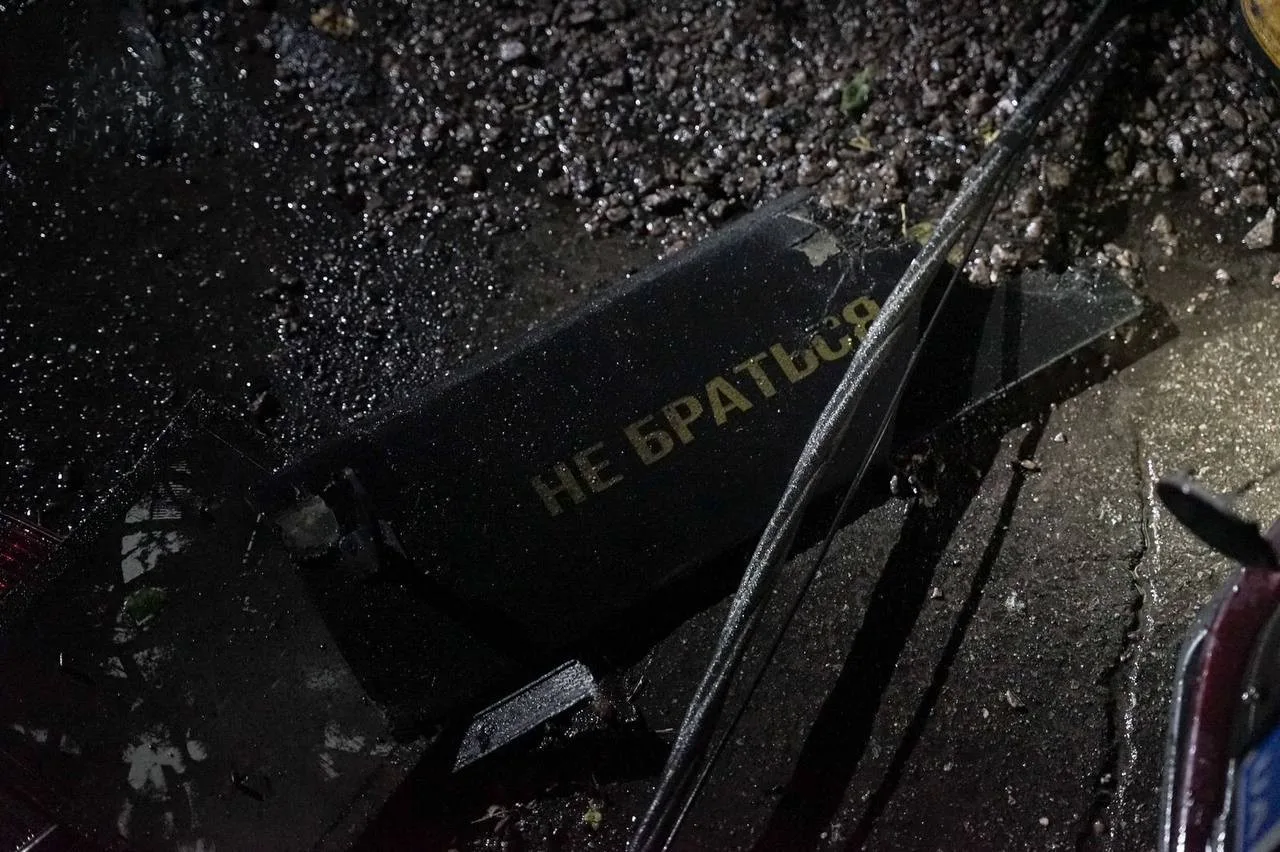
The night of September 20-21, the Russian Federation conducted another routine attack: 172 unmanned aerial vehicles of various types were launched from seven directions simultaneously — from Belgorod to temporarily occupied Crimea. The Air Force of the Armed Forces of Ukraine reported the destruction or suppression of 147 drones and one guided aerial bomb "Banderol." At first glance, this is a success — almost 86% of targets eliminated. But behind these percentages lies the arithmetic that determines every night how many Ukrainian cities fall asleep under explosions.
Geography of the attack: seven directions instead of one
Shahed-type drones, including 64 rocket-propelled modifications, flew from Belgorod, Shatalovo, Oryol, Kursk, Primorsko-Akhtarsk and Millerovo in Russia, as well as from temporarily occupied Donetsk and Hvardiyskoye in Crimea. Simultaneously, "Gerber" decoy drones and "Parody" imitation decoys were employed — their purpose is not to hit targets, but to overload the air defense system with false targets and force expenditure of resources on objectives that physically carry no warhead.
This very tactic of mixing real strike drones with cheap imitations is the main challenge for air defense in recent months. Each launch forces a radio electronic warfare operator or a mobile fire group calculation to make a decision in seconds: is this a Shahed with a warhead or an empty Gerber, which costs many times less than an interceptor missile.
What 14 impact locations mean
According to official data, despite the work of aviation, air defense missile forces, radio electronic warfare units and mobile fire groups, impacts were recorded at 14 locations and debris from destroyed targets fell at 4 more. This means that even 86-percent interception efficiency does not equal territorial protection — 25 drones or their debris still reached the ground.
According to preliminary data, as of 08:00, air defense destroyed/suppressed 147 enemy UAVs of Shahed, Gerber type, drones of other types and 1 "Banderol"/"Dan-T"
The Air Force clarifies that at the time of reporting, the attack was still ongoing — some drones remained in Ukrainian airspace. This is a typical feature of night mass strikes: final statistics on destroyed targets and those that reached their objectives are compiled in the morning, after mobile groups finish their work in front-line and rear regions.
Why the figure 172 is not a record, but the norm
The number of drones in a night attack at the level of 150–200 units has become routine for Ukrainian air defense, not an exceptional case. This directly affects expenditures: each night of this scale means spent air defense missiles, operator resources for radio electronic warfare and wear on equipment of mobile fire groups, which work practically around the clock without breaks.
The question that remains open: is Ukraine able to increase the production of interception means faster than Russia scales up production of Shaheds and their imitations — and the answer to this race determines whether the number of impacts will remain at the level of 14 locations per night, or will begin to grow.