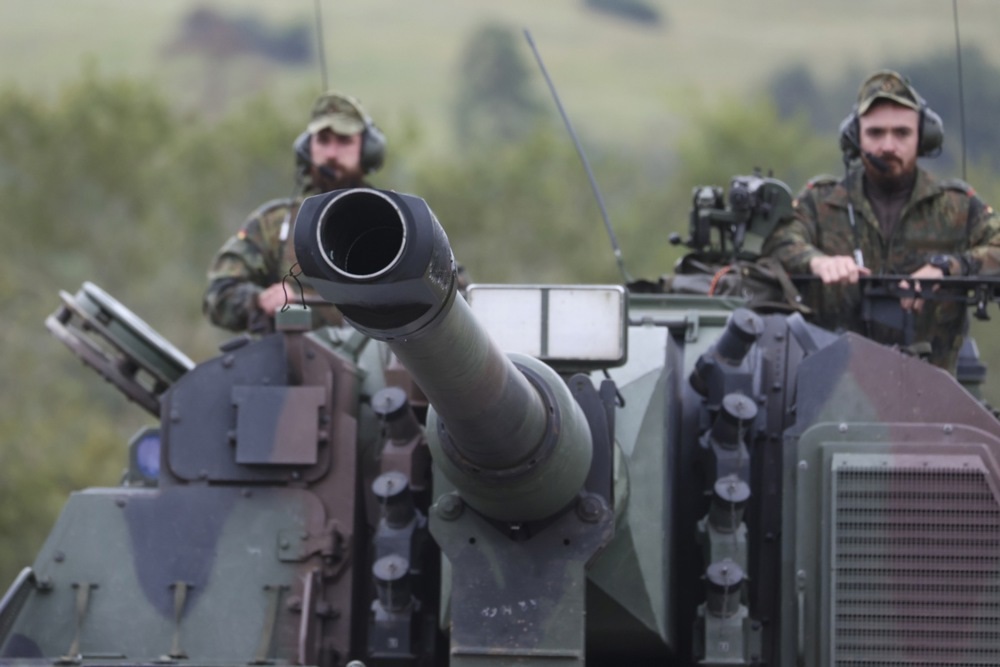
Several Bundeswehr soldiers were not allowed to serve in the German brigade deployed in Lithuania. The reason was Russian or Belarusian descent, which prevented them from passing a security check. This is reported by Bild, citing informed sources.
Formally, this is neither a ban nor a punishment. The military personnel remain in the Bundeswehr and continue their service in Germany; they simply do not receive positions requiring enhanced access to classified information. However, the very fact that descent—rather than actions or views of a specific person—became a selection criterion for a brigade near the Russian border demonstrates how seriously Berlin has begun to take the issue of military loyalty.
Why relatives in Russia is already a NATO security issue
German military counterintelligence explains the logic directly: military personnel with family ties in Russia or Belarus are more vulnerable to blackmail. Not because they are disloyal, but because they have someone who can be used as leverage—a relative who could suddenly face investigation, lose their job, or simply "disappear" during interrogation by local security services.
According to data from Germany's Defense Ministry, this is no longer a hypothetical risk. Some Bundeswehr soldiers and members of their families have already become subjects of interrogation and pressure from security services in these countries during trips to Russia or Belarus.
There are indeed military personnel who may have been influenced by Russian narratives, and such people should not receive clearance to serve in the brigade in Lithuania,—stated Bundestag deputy Roderich Kiesewetter.
Travel is permitted, but with conditions
An important nuance: descent alone is not an automatic basis for banning travel to Russia or Belarus. Military personnel are allowed to visit these countries, including to meet with relatives. However, counterintelligence insists that such trips be reported to command in advance—so the state at least knows who is traveling, when, and where, and can assess the risk of pressure in advance rather than after the fact.
This is a compromise approach: Germany does not want to appear as a state that suspects its citizens based on ethnic descent, but it also cannot ignore that having relatives in Russia is an open channel of influence that FSB professionals are exploiting.
Context: The Kremlin is preparing sabotage, not just disinformation
The Bundeswehr's decision came against the backdrop of warnings from European intelligence services about growing Russian campaigns of sabotage and provocation against Western countries in the coming months. Intelligence services from the Czech Republic, Latvia, and Sweden forecast intensified such activities, and Lithuanian intelligence has already received data about Moscow's preparation of a hybrid operation against states supporting Ukraine.
In this context, the Bundeswehr brigade in Lithuania is not abstract symbolism of allied presence but a unit deployed directly near a potential line of escalation. And the question of who can be trusted with classified information there ceases to be theoretical.
How far other NATO countries are willing to go in checking the loyalty of their own military personnel with similar descent—and whether this will become a precedent for significantly stricter filters in European armies while the Kremlin continues to seek weak points in allied structures—remains to be seen.