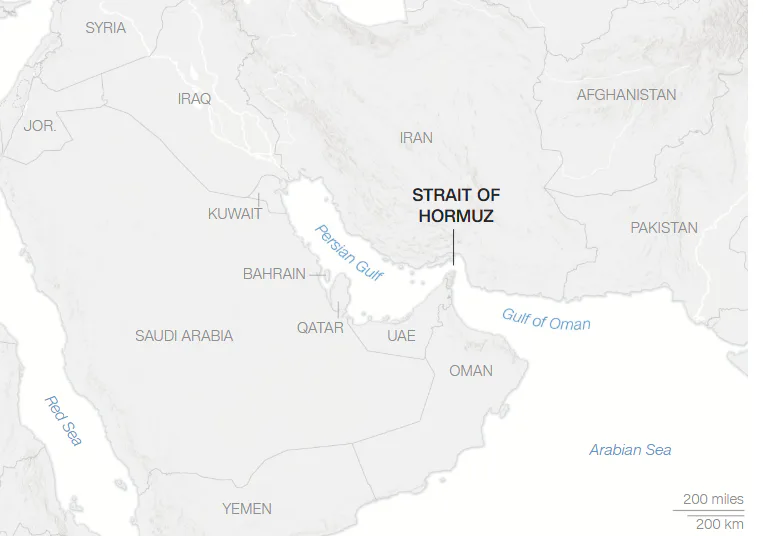
On the night of July 13-14, 2026, the Islamic Revolutionary Guard Corps (IRGC) fired cruise missiles at two UAE oil tankers — Mombasa and Al Bahia — in the southern shipping corridor of the Strait of Hormuz in Omani territorial waters. According to the UAE Ministry of Defense, one crew member died — an Indian national from the Mombasa. Of the eight wounded, two are Ukrainian citizens and six are Indian; four sustained serious injuries.
A corridor that was supposed to be protected
The strike did not occur in neutral waters — the tankers were traveling along that very southern route that runs along the Omani coast under the protection of the U.S. Navy. This corridor emerged after Iran mined the central part of the strait. In June, U.S. Energy Secretary Chris Wright stated that the American fleet had effectively deprived Tehran of the ability to block the strait. Iran responded with a strike on a vessel on the same route — and the U.S. conducted another round of airstrikes on Iranian coastal infrastructure.
According to shipping market analysts, Tehran is conducting a "sporadic targeted campaign" against the southern corridor, attempting to force Persian Gulf countries to switch to the northern route, agreed upon with the Iranian side.
IRGC version: "vessels did not comply"
The IRGC called the Mombasa and Al Bahia "violating vessels" that allegedly disabled navigation systems and ignored warnings from Iranian authorities in the strait.
IRGC statement on Telegram, July 14, 2026
The UAE Ministry of Defense rejected this version, qualifying the attack as a gross violation of international law and announcing increased combat readiness. The UAE Ministry of Foreign Affairs issued a separate sharp protest.
Context: third consecutive night of strikes
The strike on the tankers coincided with the third consecutive night of American airstrikes on Iran. According to CENTCOM, on the night of July 14, U.S. forces attacked coastal defense facilities, missile and drone positions, and maritime infrastructure in Bushehr, Chabahar, Jask, Konarak, Abu Musa, and Bandar Abbas. Simultaneously, Bahrain reported intercepting Iranian air attacks over its territory.
This was not the first strike on this route in July: on July 7, the Qatari LNG tanker Al-Rekayyat and the Saudi supertanker Vepian came under fire. The threat level for vessels in the strait after those attacks was raised to "serious."
What it means for seafarers
Two Ukrainian crew members — a reminder that Ukrainian citizens find themselves in the zone of Iranian strikes not only on land. How many Ukrainians currently work on vessels passing through Hormuz is unknown: the vessel registry does not disclose crew nationalities in real time.
- Deceased: 1 (Indian national, tanker Mombasa)
- Seriously wounded: 4 out of 8
- Ukrainian citizens among the wounded: 2
- Fires on both vessels: contained by crews
If the U.S. cannot guarantee security in the "protected" corridor after this strike — some shippers will consider alternative routes around Cape of Good Hope, adding 10 to 14 days to transit and directly impacting oil prices on global markets.







