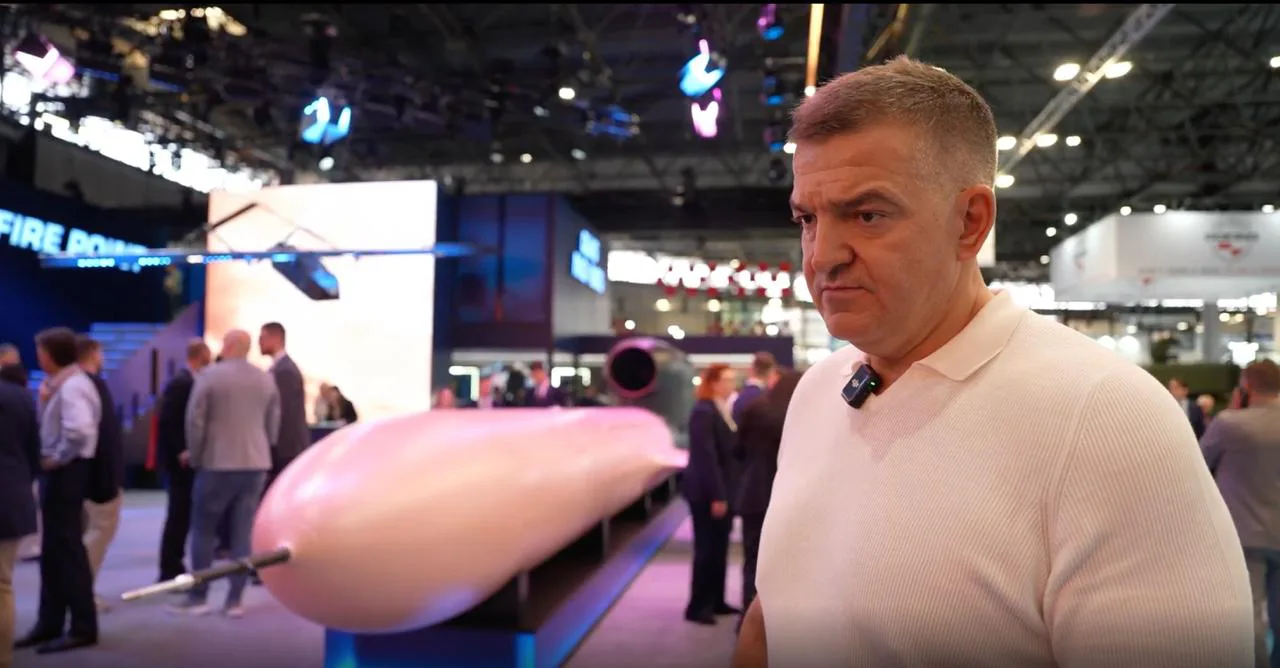
At the international arms exhibition Eurosatory-2026 in Paris, Fire Point's chief designer and co-founder Denys Shtilerman voiced a figure that reframes the scale of a single private company in this war: FP-1 and FP-2 drones account for up to 60% of strikes against targets on Russian territory and approximately 60% of hits on medium-range targets.
This is not a marketing statement at an exhibition booth — it is a logical conclusion of the trajectory the company has taken over two years. From a startup to an enterprise valued at $2.5 billion, from several dozen drones per month to approximately 260 units per day, as reported by company CEO Irina Terekh at a masterclass at Sciences Po on the eve of the exhibition.
What Makes FP-1 a Mass Weapon
FP-1 is a disposable strike unmanned aerial vehicle, introduced in late 2024. Its range reaches up to 1600 km with the current warhead of 113 kg. The price is approximately $55,000 per unit. According to Shtilerman, the modernized version will carry 105 kg over more than 1000 km — compared to the current 60 kg. A change in fuel tank design (relocation to the wing) achieved both improvements simultaneously.
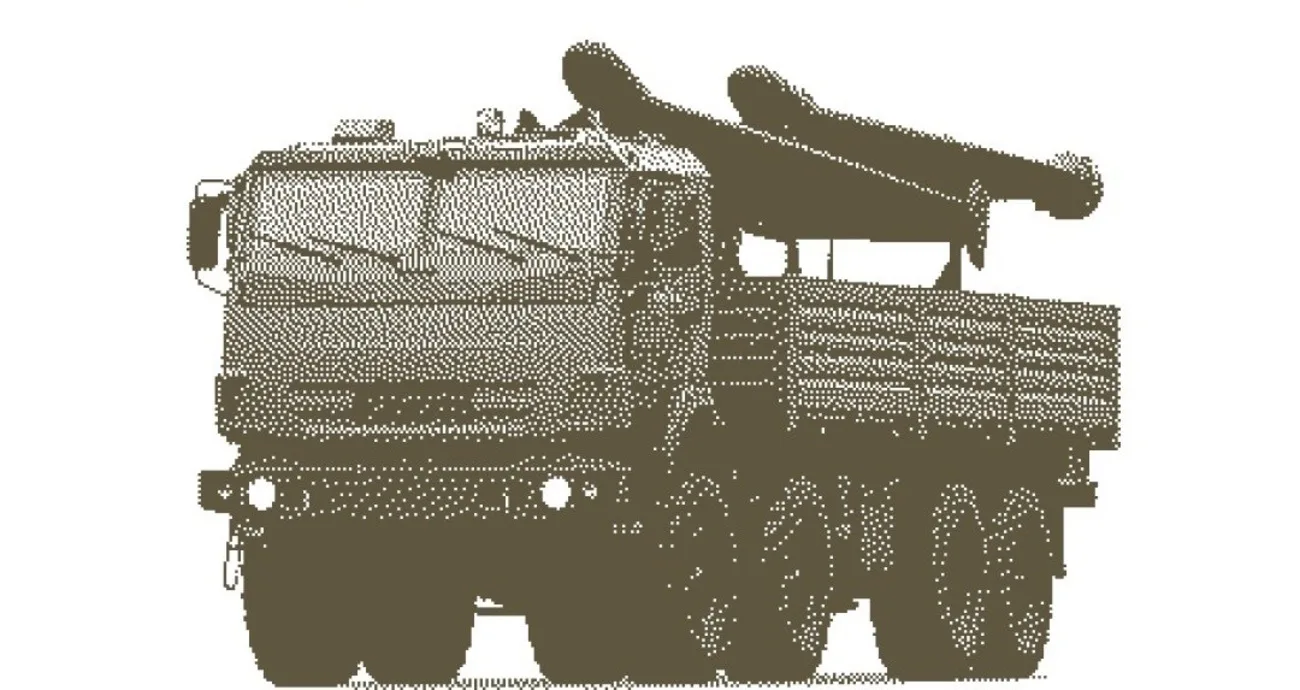
FP-2 is an operational-tactical version for strikes at 200–300 km range. After modernization, its warhead will increase from 105 to 158 kg. Both systems are launched from trucks disguised as civilian transport — the company has abandoned stationary platforms and airbases.
Shtilerman also described a new tactic employed by the AFU against enemy aircraft: FP-1 carries two combat quadcopters and takes position near a Russian airfield in standby mode — awaiting the appearance of a target aircraft.
«We are setting ambushes near Russian airports».
Denys Shtilerman, Fire Point co-founder, 24 Channel
Complete Lineup — First Time in Paris
Eurosatory marked Fire Point's first participation in this exhibition. The company presented not mockups, but actual samples — without navigation blocks and warheads. The lineup includes:
- FP-1 / FP-2 — strike drones for deep and medium-range strikes
- FP-5 Flamingo — ground-based cruise missile, range up to 3000 km, warhead 1150 kg; already used against a defense plant in Cheboksary
- FP-7.x — anti-ballistic missile, considered as a basic element of the future pan-European FREYJA shield
- FP-9 — ballistic missile with a range of up to 850 km and payload 800 kg; approximately 9.5 m in length, up to 1.1 m in diameter, making it larger than the Iskander and ATACMS
FP-9 is expected to receive codification from Ukraine's Ministry of Defense around summer 2026. Production is 90% localized in Ukraine — key components (engine, navigation, servos) are to be produced exclusively within the country. At the exhibition, the company also displayed its own AKIRO/KUROSAVA machines for manufacturing composite components for FP-5, FP-7, and FP-9.
For comparison: FP-7 — a tactical ballistic missile with a range of up to 200 km and a warhead of approximately 150 kg — is a "clone" of the Soviet 48N6 architecture from S-400 systems, but manufactured from composite materials and with its own guidance system.
If FP-9 passes codification and enters serial production this summer, Ukraine will have its own ballistic missile capable of reaching Moscow — without dependence on foreign supplies. The question lies elsewhere: will a company already producing 260 drones per day be able to simultaneously scale rocket production without losing quality control — or is this the threshold where private initiative requires systematic state integration.