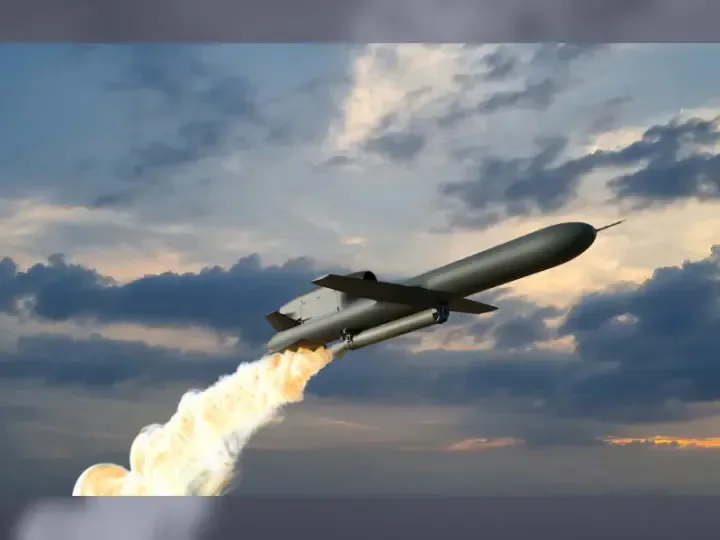
Over several months, Russia has for the first time officially acknowledged what it previously concealed: fuel supply disruptions are a direct consequence of Ukrainian strikes on oil refining infrastructure. On June 9, Russia's Ministry of Energy issued a statement mentioning "increased hostile air attacks," which led to "temporary difficulties with supplies." This was preceded by a significant escalation of the drone strike campaign.
Figures the Kremlin cannot ignore
According to Reuters, Russian gasoline production has declined by approximately 25% compared to the average daily level in June 2025 — to around 90,000 metric tons per day. Meanwhile, according to analytics company LSEG, maritime exports of oil products fell by 15% in just the first half of June alone, to 3.3 million tons.
Analytics platform Kpler records that offline secondary refining capacity in Russia in May was 1.2–1.3 million barrels per day higher than a year earlier — with a significant portion of this figure attributable to the consequences of drone strikes. Hydrocrackers — technologically complex refining nodes — have been disabled at a level of 250,000 barrels per day compared to 50–60 thousand a year ago.
"If equipment of this type is attacked repeatedly, the economic effect is much greater than from strikes on storage tanks or primary processing units. Not all strikes are equivalent: damage to specialized bottlenecks is much harder to compensate for."
Tatiana Mitrova, Center for Global Energy Policy at Columbia University — for RFE/RL
Geography of the crisis
Border regions were the first to face fuel shortages — Belgorod, Kursk, Rostov regions and occupied Crimea. However, by June the crisis had become nationwide. The 7x7 publication recorded fuel sales restrictions in at least 14 regions — from Moscow to Kamchatka. In some regions and in Crimea, panic buying and gas station queues have been recorded.
In response, Moscow banned gasoline exports on April 1, and aviation fuel exports from June 1. The government is also considering fuel imports and subsidies for gas stations. Zelensky announced that since the beginning of the year, attacks have damaged 15 Russian refineries, and as of May, almost 40% of primary refining capacity had been knocked out.
Strategic logic of "kinetic sanctions"
At the Baker Institute, this approach was termed "kinetic sanctions" — as opposed to financial instruments that Russia has learned to circumvent through shadow fleets and offshore schemes. A drone hits a refinery much faster than a legal mechanism restricts a shell company's operations. As ACLED records, if the pace of strikes is maintained, Ukraine could carry out over 800 deep strikes on Russian territory in 2026.
Meanwhile, analysts caution against excessive optimism: some facilities demonstrate the ability to recover quickly. Port Ust-Luga, which lost about 40% of its oil export capacity in March, had already increased its throughput by 49% in May — the queue of tankers in the Gulf of Finland dispersed. Refinery capacity is more resistant to recovery, port capacity less so.
If Ukraine continues to systematically disable technological bottlenecks specifically — hydrocrackers and catalytic cracking units — rather than storage tanks, the critical question will be: will Russia have time to import spare parts and restore capacity before autumn demand growth converts production decline into a full-scale logistics crisis at the front?







