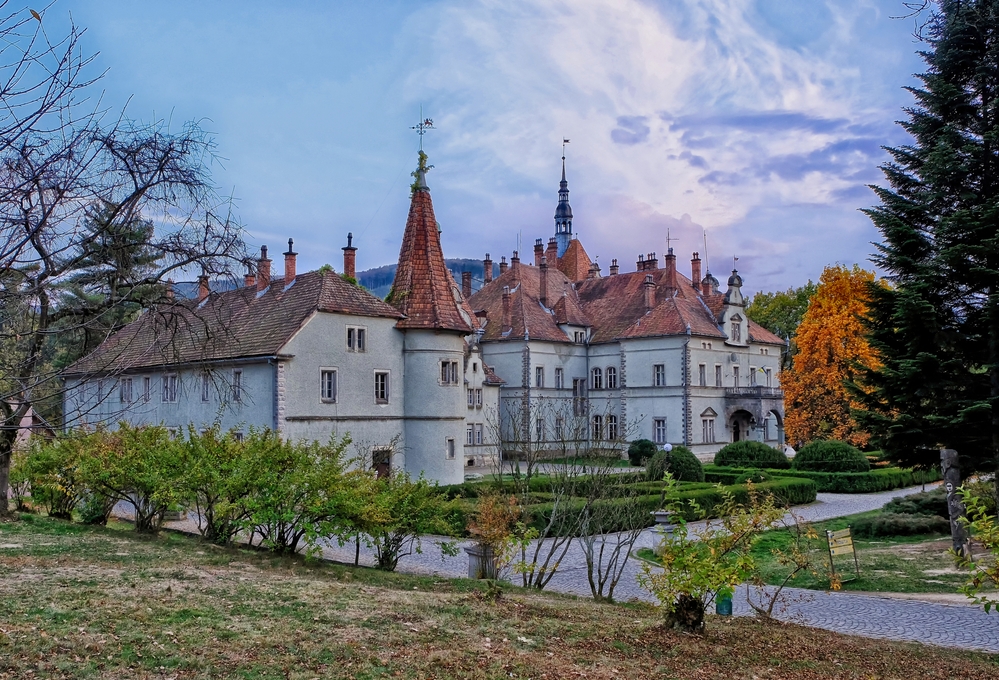
The Kuyalnik sanatorium in Odesa region and the palace of the Counts Schönborn in Zakarpattia are united by one thing: both are deteriorating on the state balance sheet, both require hundreds of millions of hryvnia, and neither can be privatized. The State Property Fund proposed a solution — public-private partnership (PPP), where business invests and manages, while ownership rights remain with the state.
What the SPF Proposes
The logic is simple: the state as owner lacks funds for restoration, and selling architectural monuments is prohibited by law. PPP allows attracting private capital without changing ownership — the investor gains the right to manage the facility and profit from it during the contract term.
For Schönborn Palace, the figures have already been calculated. According to a presentation by SPFU during the first 100 days of Dmytro Natalukha's tenure as head, restoration and transformation of the palace into a tourist complex requires 200–400 million hryvnia, implementation timeline is 2–4 years, with payback in 8–12 years.
"Schönborn Palace is an underutilized asset that, through PPP, will be transformed into a profitable tourist facility of national significance."
— SPFU Presentation, 2025
After launching the tourist site, projected annual revenue is estimated at 40–80 million hryvnia, with visitor flow reaching up to 150,000 per year. The palace, covering 2.9 thousand square meters, has been in state ownership since April 23, 2023. Previously, it was part of Ukrprofozdorovnytsia and operated as the Karpaty sanatorium — a former hunting residence of Austrian counts, built in the late 19th century.
Mechanism: Framework Exists, No Tender Yet
On June 19, 2025, the Verkhovna Rada adopted a new Law "On Public-Private Partnership" (No. 7508). In particular, it introduces an electronic trading system for concession tenders by EU standards and introduces the concept of a "donor" — an international partner who can finance a project directly or through budgets, reducing risks for the private investor.
Natalukha — the same Dmytro Natalukha who heads SPFU — while chairing the relevant Verkhovna Rada committee, promoted this law and stated that the PPP mechanism "throughout its entire history has yielded only two major concession agreements." According to his assessment, the new law should attract "up to 1 billion dollars in investments in the coming years."
However, the announcement of PPP for Kuyalnik and Schönborn is, for now, just an announcement. A tender for selecting a private partner has not been announced, technical and economic justification has not been disclosed, and the terms of income distribution between the state and investor have not been publicly defined. The law creates a procedure; filling in specific contracts is separate work.
Broader Context: 2,219 Legal Entities, 274 Liquid
The PPP initiative is part of a broader SPFU audit. According to Natalukha, the fund's balance sheet contains 2,219 legal entities, but only 274 of them are liquid: the rest are enterprises on occupied territories, in bankruptcy, or fictitious liquidation. In Kyiv, the fund additionally identified 8,000 square meters of real estate it previously "didn't see."
Over the first 100 days of the new team, 90 successful auctions were conducted for approximately 1 billion hryvnia — nearly half the annual plan. Another 307 million hryvnia came from rental and 205 million hryvnia from the sale of sanctioned assets. For facilities that cannot be privatized, PPP is the only remaining monetization tool available.
The question is not whether an investor will be found for a Carpathian castle during active war. The question is on what terms the state is willing to share income from facilities it has been unable to maintain independently for decades — and whether these terms will be made public before the contract is signed.







