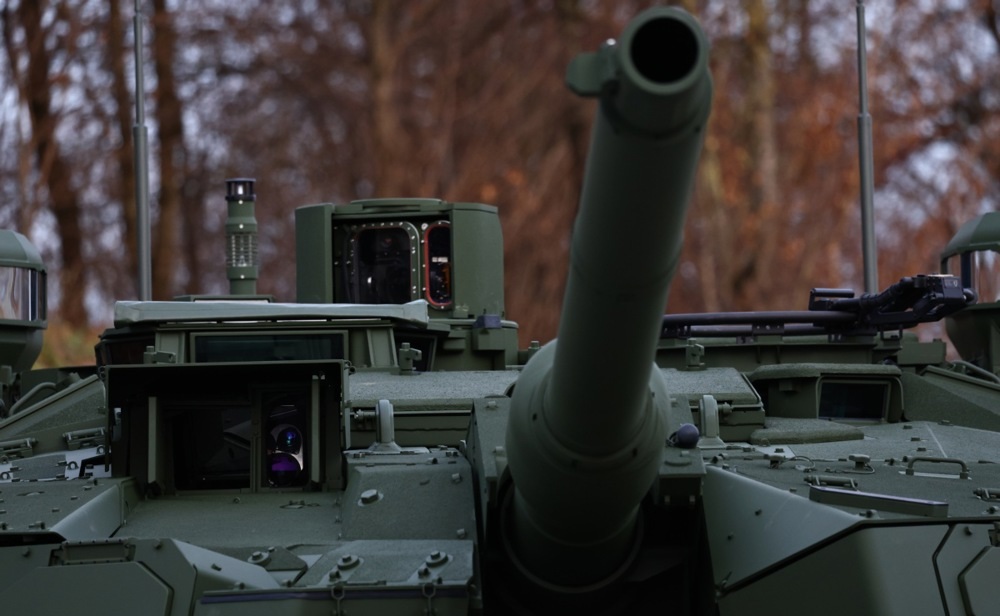
When Reuters reported that Berlin would purchase 40% of the shares in the Franco-German defense conglomerate KNDS, the news looked like a routine state transaction. But behind it lies the dissolution of a unique ownership structure that has existed since 2015.
Who is selling and why
KNDS emerged in 2015 from the merger of two private and state giants: the German Krauss-Maffei Wegmann (manufacturer of Leopard 2 and the PzH 2000 self-propelled howitzer) and the French Nexter Systems (Leclerc tank, CAESAR howitzer). The ownership structure was almost symmetrical: the Wegmann family controlled 50% plus one share, while the French state through the GIAT agency held 50% minus one share.
Now the Wegmann family wants to exit the business entirely. This is what triggered the whole process: without a buyer for their stake, an IPO cannot proceed. According to Reuters, the listing on the Frankfurt and Paris exchanges is scheduled for June–July 2025, with the conglomerate valued at approximately €20 billion.
What Berlin gets—and what it costs
According to an anonymous German official, the purchase price will be tied to the market rate without any premium or discount. If KNDS's valuation indeed reaches €20 billion, the 40% stake will cost Berlin approximately €8 billion. Negotiations are being handled by the Ministry of Economics in coordination with the Ministry of Defense.
Parity with France is not merely symbolic: both countries will have equal voting rights regardless of stake size. This matters because within two to three years, both states intend to reduce their stakes to 30%—through the placement of shares on the market.
"The goal is to substantially reduce the state stake over time. In the long term, defense companies typically don't need majority state ownership."
Tom Enders, chairman of the KNDS board of directors
Enders also noted that 80% state ownership initially may be "only a starting point"—and that national interests are better protected through contracts and special agreements rather than through equity stakes.
Context: rearmament as a business case
KNDS reported revenue of €3.8 billion in 2024 and an order backlog of €23.5 billion—nearly six years of production volume. Following Russia's invasion of Ukraine, defense budgets across Europe are growing, and shares of public weapons manufacturers are hitting records. The Wegmann family chose the moment perfectly.
- Leopard 2—main battle tank used in over 20 NATO countries
- CAESAR and PzH 2000—self-propelled artillery systems actively supplied to Ukraine
- Headquarters—Amsterdam, production—Munich, Kassel, Versailles, Rouen
Defense Minister Boris Pistorius first raised the issue of state participation in July 2024. Negotiations between Paris and Berlin lasted several weeks—and according to Reuters, the main sticking point was precisely the symmetry of the stakes.
What remains open
The deal establishes parity between the two states at the outset, but does not fix what will happen after stakes are reduced to 30%: who will buy the remaining shares on the market and whether a third major player with voting rights might emerge—for example, a sovereign wealth fund or another European government. If the IPO takes place in the summer at a €20 billion valuation, it will become one of Europe's largest defense offerings in recent years—and a test of how willing the market is to pay for a state-controlled asset with limited free float.







