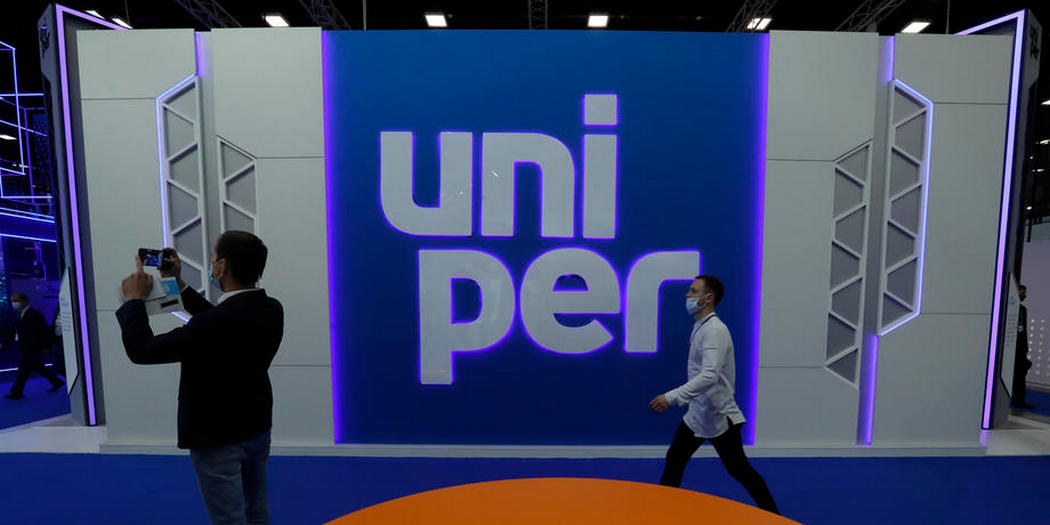
On May 19, 2025, Germany's Finance Ministry officially launched the privatization process for Uniper. Interested investors were to submit applications by June 12 — after which Berlin would decide whether to sell the company to a strategic buyer or take it public through an IPO.
According to Reuters, the government owns 99.12% of Uniper's shares and is obligated to reduce its stake to no more than 25% plus one share — a requirement from the European Commission that must be met by the end of 2028.
How Uniper Became a State-Owned Company
Until 2022, Uniper was Gazprom's largest customer in Europe. When Russia, following its full-scale invasion of Ukraine, began cutting supplies through Nord Stream and then halted them completely, Uniper was forced to buy gas on the market at spot — crisis — prices. The company was losing billions monthly.
According to Euronews, the total cost of nationalization exceeded 51 billion euros — mostly from tax revenues, as the government canceled the gas levy that was supposed to cover part of the costs through tariffs. In 2022 alone, the state injected approximately 13.5 billion euros into the company's capital.
"This represents a significant portion of Germany's gas bill, which is now paid from the budget — rather than, as planned, through a gas surcharge"
— Klaus-Dieter Maubach, Uniper CEO, 2022
In March 2025, Uniper repaid the state 2.6 billion euros — the first real repayment for state aid in accordance with an EU Commission decision.
Brookfield or IPO: Two Scenarios with Different Risks
Among potential buyers, Euronews names Canadian investment fund Brookfield — a company led by former Bank of England Governor Mark Carney. Uniper's current market value stands at approximately 18.3 billion euros, but analysts warn that the sale could occur at a discount to this figure.
The alternative scenario is a re-IPO: partial listing of shares on the stock exchange while the state retains a blocking stake. This is the option supported by trade unions.
"We consider any attempt at takeover a hostile act against worker interests and will firmly oppose it"
— Harald Segatze, head of Uniper's works council, Bloomberg, June 2025
The Verdi and IGBCE trade unions sent a joint letter to several ministers demanding that any direct sale agreement be ruled out. Workers insist: an IPO with 25% retained by the state is the only option that protects both employment and the country's strategic interests.
What This Means for Ordinary Consumers
Uniper is not an abstract holding company: it trades electricity and gas in over 40 countries, owns gas storage facilities and generation capacity. Whoever becomes the owner and what strategy they choose will directly affect tariffs for municipal utilities — and through them, household bills in Germany and neighboring countries.
If Brookfield or another private fund gains control, profitability will become the priority — rather than, for instance, supply stability during a crisis. This is the scenario that frightens trade unions, and it is not without merit: in 2022, it was Uniper's commercial logic — maximum dependence on cheap Russian gas — that cost Berlin over 51 billion euros.
If the government chooses an IPO, the company will remain under partial state control but will be vulnerable to market volatility — especially given that Uniper has already recorded a significant decline in profits for the first nine months of 2025 compared to the record 2024.
Berlin has not yet named the winner. A decision is expected after summer — and it will be the first major test for Friedrich Merz's new government in a situation where taxpayer money, energy security, and union pressure are pulling in different directions.
If Berlin chooses a direct sale deal with a private fund — will the state have the leverage to prevent the next crisis, when the new owner again optimizes costs at the expense of supply reliability?







