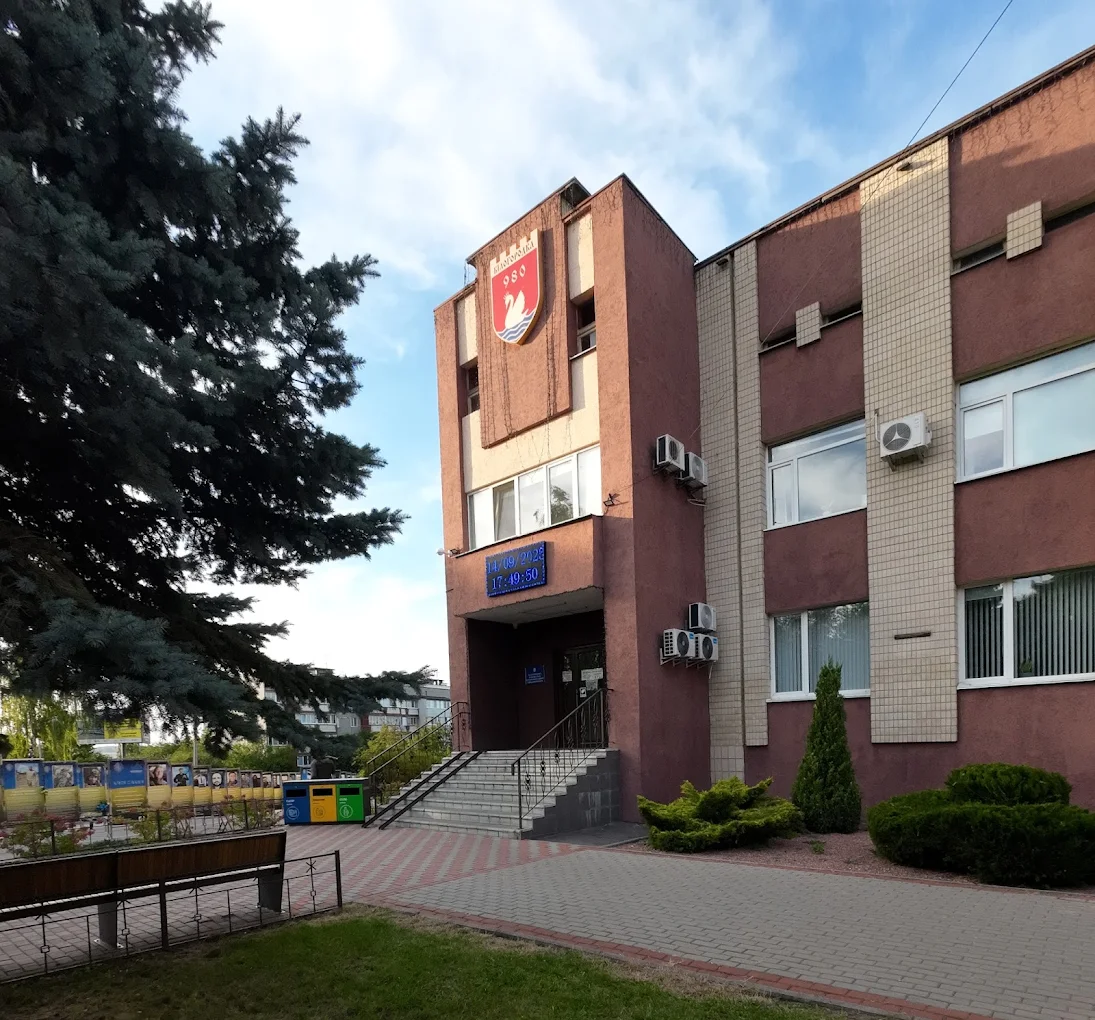
At the center of the story is an old state kindergarten in Bilohorodka, built back in the 1970s. According to representatives of the community and technical specialists, the problem can no longer be solved with cosmetic repairs. The building has worn-out utilities, old electrical wiring and infrastructure that is not designed to handle the load during our turbulent times. This is especially relevant during blackouts, when connecting generators to old networks creates a serious fire risk. And of course, there is the shelter problem.
That is why the community decided to include the facility in a major reconstruction project financed under the European Investment Bank program. It is not just about this kindergarten: the package also includes a school in Sviatopetrivskyi and another preschool facility. Under the program conditions, all facilities are interconnected, and the failure of any one of them could jeopardize the financing of the entire package.
This is actually a very rare case, worthy of broad publicity and, as they say, scaling up. It turns out that communities can obtain independent external financing from reputable international financial institutions to address important issues in developing social infrastructure. Because these institutions understand how complex our current situation is right now—especially for such infrastructure—and how serious such issues are.
Investment bankers also understand the main project problem: the difficult search for local optimality under the conditions of opposing factors. But what they don't understand is the sacred ritual, excuse me, the fuss, which must inevitably begin with any project here. Posts quickly appeared on Facebook and Telegram claiming that the authorities allegedly "close the only state kindergarten," "leave the community without preschool education" and force parents to "drive children to neighboring villages during wartime." The text is emotional, dramatic and "doom-laden."
Well, of course, even the European Investment Bank cannot do both repair an emergency building (though it would be cheaper to build a new one) and build a new one too, and also maybe replace the pavement on some roads where there are holes.
There is not even an official decision to close the kindergarten, but groaning and lamentation about the closure have already begun, and an "initiative group" has been formed. The facility is operating in its normal mode. For now, various options for conducting reconstruction are being considered: some work during the summer period, phased updates in blocks, or temporary transfer of children to other kindergartens in the community, in Muzychai and Horenychai.
But it is precisely this last option, still hypothetical, that has caused the most outrage. Although the kindergartens in Horenychai and Muzychai have already undergone reconstruction and have shelters and modern conditions. The community separately states that transportation of children, if needed, will be organized for free.
Social media protesters can declare their disagreement very loudly, but at the same time they do not answer the questions that arise of themselves: if this way is not possible, then what way is there? How exactly should one conduct reconstruction of an emergency building? How can one change electrical networks, utilities and structures in a kindergarten where children are present every day? What prayer should one read when during a blackout a generator needs to be connected and one has to pray there will be no fire? And who will bear responsibility if some kind of accident happens in the old building?
Unfortunately, our society is so nervous and disheartened that any discussion can very quickly abandon the constructive, civilized path. Toxic distrust of everyone toward everyone has become very widespread. And it is simpler to write in telegrams "the authorities are closing the kindergarten" than to work through multi-page explanations and documents about the technical condition of networks or the conditions of grant programs. Social media in general are poorly suited for complex decisions. They like simple storylines: there is "betrayal," there are "the guilty ones," there are "concerned activists." But questions about old wiring, tender procedures and the risk of losing international financing generate significantly fewer reactions.
At the same time, parents' concerns are completely understandable. People have been living in a state of constant stress since 2022, and some since 2014. War, alarms, blackouts, distrust of officials—all of this creates an atmosphere in which any word "temporary" automatically raises suspicion. Ukrainian society has long learned not to believe promises. And this is also part of reality.
But there is another side to the question. Old Soviet buildings do not become safer from the number of outraged posts on Facebook. Electrical networks are not repaired by the force of comments. And international grant programs have the unpleasant property of ending if projects begin to sink in local disagreements.
As a result, Bilohorodka received not just a dispute over kindergarten repairs, but a classic Ukrainian conflict of our times. When a technical problem risks gradually turning into an information war. When any complex decision is instantly declared "the destruction of the community." And when the main venue of struggle is no longer public hearings, but social media feeds. While adults argue about "betrayal" and "manipulation," the old kindergarten meanwhile continues to age.
The only way to find an acceptable solution is frank, transparent conversation, direct contact between all interested parties, discussion, meetings. Cultured, civilized dialogue. Trust is harder to build than to spread around I don't know what. But trust in the community is the only path for community development, and there is no alternative to it.
The next meeting of parents, representatives of the village council and the contractor is scheduled for May 20. Come, if you can.