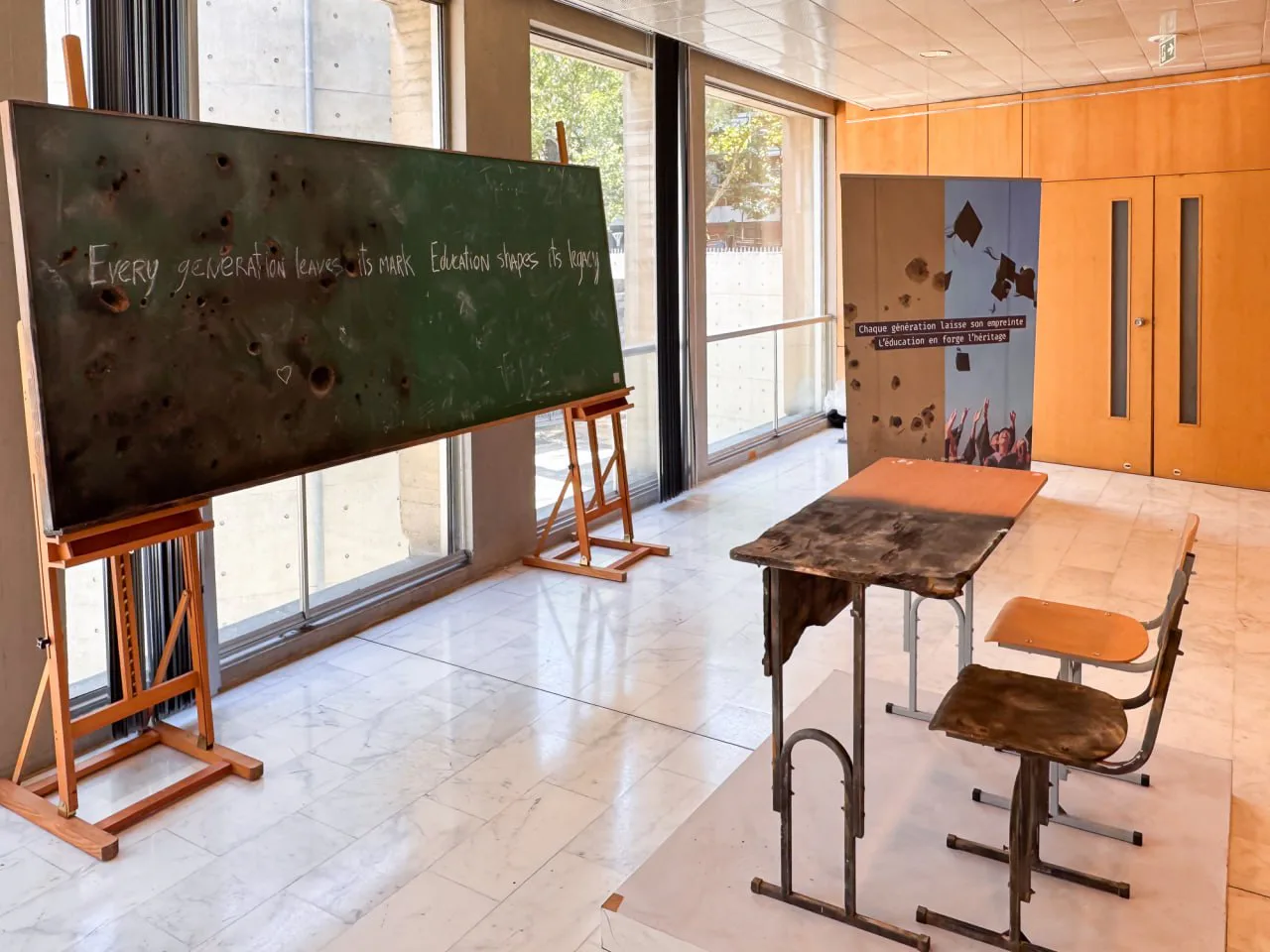
A school desk is an object so ordinary that it becomes invisible. That is why Ukrainian authors chose it as the object of the installation "One Desk. Two Footprints", which now stands at UNESCO's headquarters in Paris. Two footprints are not a metaphor: they are the footprints of two children, one of whom went to school, the other has either not returned or is forced to study in shelters.
A Symbol Understood Without Translation
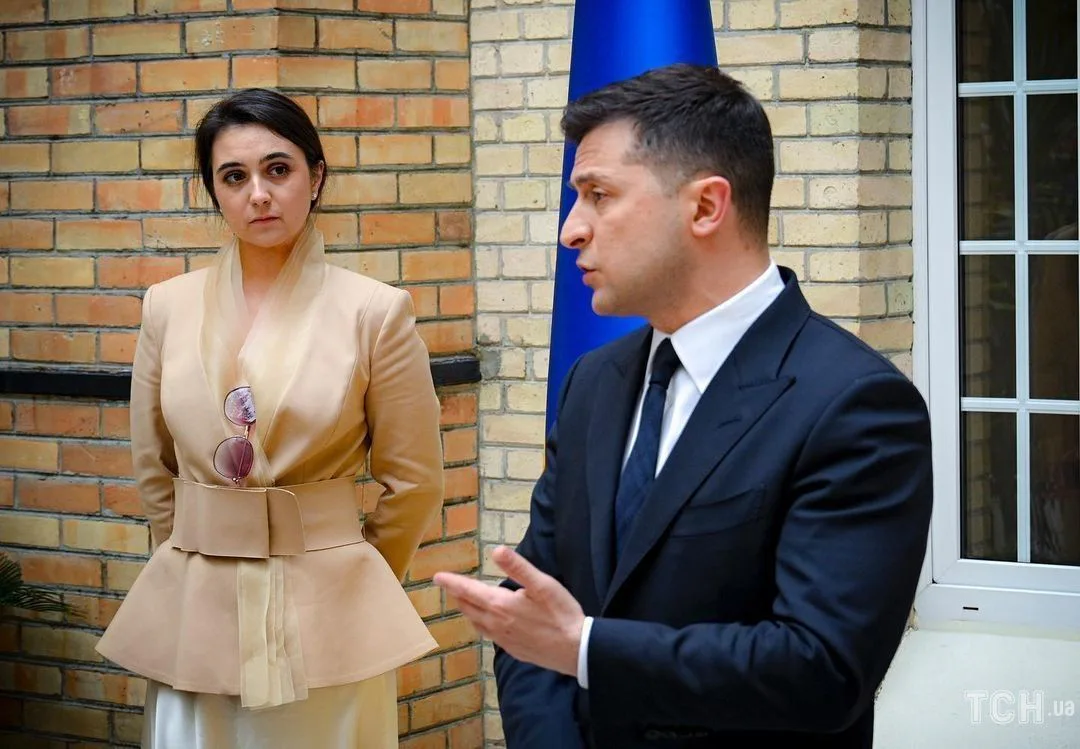
First Lady Olena Zelenska, who opened the installation together with UNESCO Director-General Khalid El-Enany, was asked why a desk specifically. According to her, the image of a damaged desk is understandable without translation in any country in the world.
"War destroys, and education restores. It is in education—our resilience and our future."
Olena Zelenska, First Lady of Ukraine, at the opening of the installation in Paris
At the same time, during the meeting with El-Enany alongside Zelenska, Foreign Minister Andrii Sybiha was present. Among the discussed topics were the restoration of the Kyiv-Pechersk Lavra and the protection of cultural values in a broader context. This is no longer a purely humanitarian visit: cultural diplomacy is directly written into the security agenda.
Numbers That Don't Fit Into a Single Image
The installation is a concentrated symbol of massive losses. According to the Ministry of Education and Science of Ukraine, 4,163 educational institutions have suffered from bombardments and shelling: 3,798 damaged, 365 completely destroyed. This is not statistics from an archive: schools continue to burn.
Meanwhile, UNESCO as of June 25, 2025, has verified damage to 501 cultural heritage sites—151 religious structures, 34 museums, 262 buildings of historical or artistic significance, 33 monuments, 18 libraries, one archive, and two archaeological sites. The Ukrainian side cites a significantly larger figure—1,949 damaged or destroyed landmarks. The gap between the figures is explained by methodology: UNESCO verifies each site using satellite imagery, independent sources, and its own inspectors, while Kyiv counts all cultural institutions without third-party verification.
The Difference Between Symbol and Mechanism
The installation at UNESCO is not the first of its kind. Previously, this same exhibition was already displayed in Strasbourg, in particular at the venue of PACE. Its second appearance at the Paris headquarters indicates a deliberate strategy: to embed the image in international institutional memory rather than simply organize a one-time action.
However, there is a significant difference between the presence of a symbol in UNESCO corridors and the existence of an accountability mechanism. As experts note, the issue of creating a document that would provide for sanctions and mechanisms of responsibility for the destruction of cultural values during war is currently only "being considered." The Hague Convention of 1954, signed by both Ukraine and Russia, formally prohibits attacks on cultural sites—but does not contain an enforcement mechanism.
- 501—the number of cultural heritage sites verified by UNESCO as damaged
- 1,949—the figure cited by the Ukrainian side
- 4,163—educational institutions that have suffered from attacks
- $19.6 billion—accumulated losses to Ukraine's cultural and tourism sectors
The Paris meeting took place as part of a broader diplomatic tour: Zelenska and Sybiha were traveling from Brussels, where security guarantees were discussed. Cultural diplomacy is embedded in the same route—it is no longer a separate direction but part of a single argument before partners.
If UNESCO verifies damage and accepts installations but has no mechanism to punish their destruction—when and under what conditions will this asymmetry between testimony and accountability finally change into something more than a declaration?