Cultural Resilience in Action
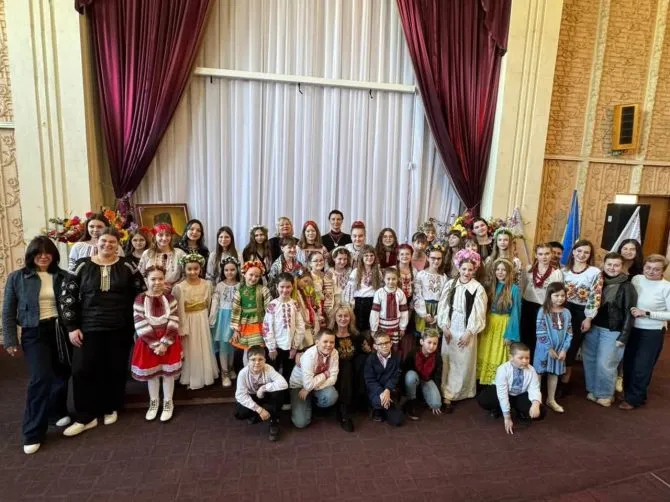
At the Taras Shevchenko Palace of Culture the annual recitation contest of Shevchenko's works "We hear you, Kobzar, through the centuries" took place. 40 young reciters from educational institutions of the Borodianka community took part in the competition, which combined artistic skill with the fostering of national memory.
The event was announced by the acting head of the Borodianka settlement council, Ірина Захарченко. For the local community, such initiatives are important not only as a celebration of the word — they reinforce civic identity and give the younger generation the opportunity to recognize their own cultural heritage.
"Learn, read, and learn from others, and do not shun your own."
— Тарас Шевченко
Winners
Younger category (up to 9 years): 1st place — Поночевна Любава (Бородянський академічний ліцей); 2nd place — Яценко Єгор (Литовсько-український ліцей), Ігнатко Спірідон (Бородянська гімназія); 3rd place — Рашківська Марина, Будєєва Віра, Нікітюк Вікторія, Третяк Аліна.
Category 10–12 years: 1st place — Стародуб Ярина (Бородянська гімназія); 2nd place — Гладун Вікторія (Пісківська гімназія), Клевчук Марія (Бородянський академічний ліцей); 3rd place — Довголап Єва (Литовсько-український ліцей), Перепльотова Єва, Поперечна Ангеліна, Гулюк Злата (Бородянський академічний ліцей).
Category 13+ years: 1st place — Романченко Надія (Новозаліський ліцей); 2nd place — Петрик Ірина (Немішаївська школа №1), Опанасенко Софія (Бородянський академічний ліцей); 3rd place — Шундік Ніколета (Литовсько-український ліцей), Лукач Єлизавета, Лупириба Дар’я (Загальцівський ліцей), Вишинська Ірина (Бородянський академічний ліцей), Панухнік Надія (Мирчанська гімназія).
What it means
This competition is an example of how local cultural practices contribute to the long-term security of the community: they build language proficiency, civic solidarity, and public communication skills in children. Cultural policy experts note that such events increase social cohesion and serve as a barometer of local recovery.
The next step for the community is to ensure regularity and broader access to such programs so that talents receive support and schools and extracurricular institutions work toward a common goal: preserving language and memory.







