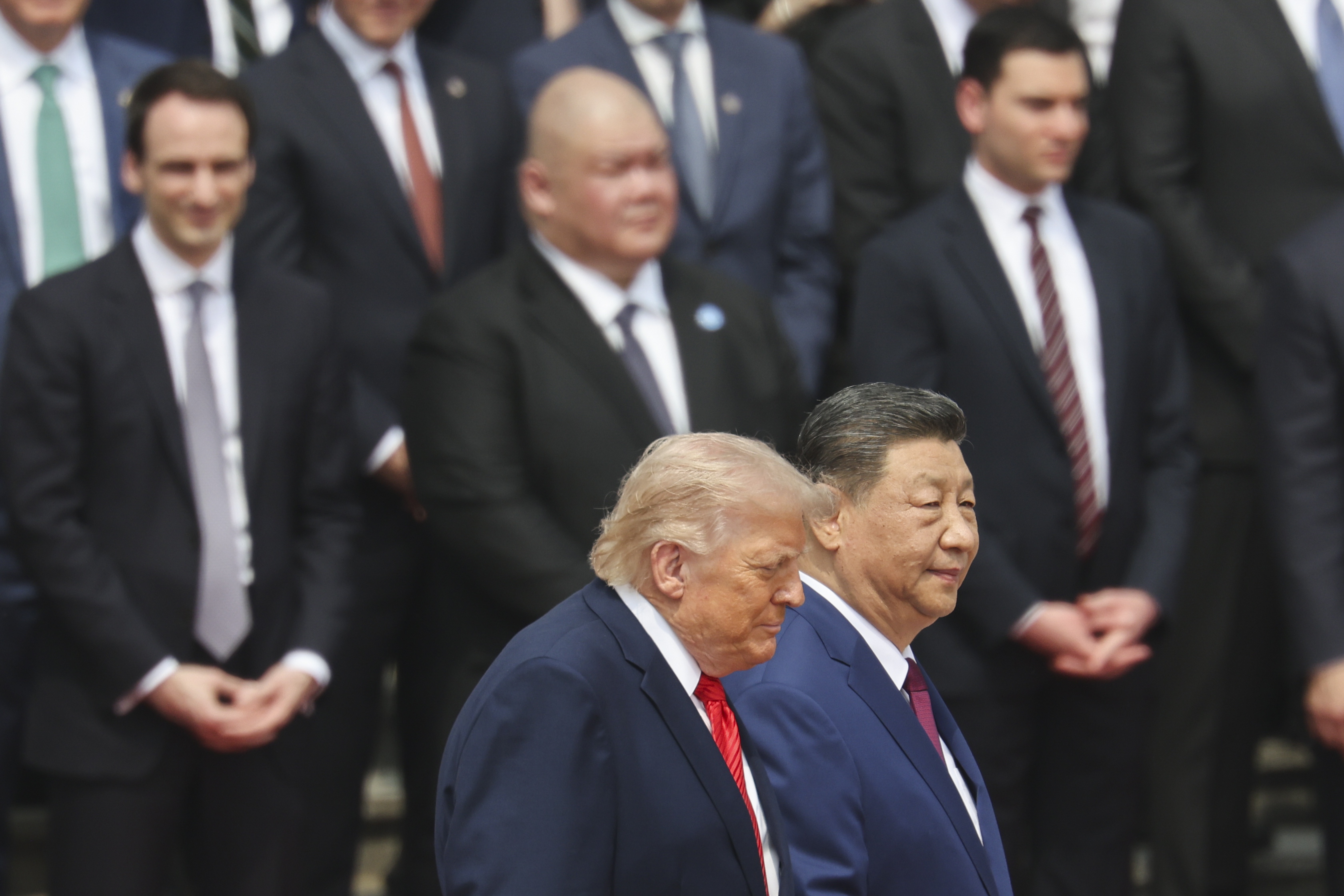
On Monday, May 19, Financial Times, citing several people familiar with the American assessment of the Beijing summit, reported that during negotiations with Donald Trump on May 13-15, Xi Jinping said that Putin may eventually regret the full-scale invasion of Ukraine. According to the publication, this is the harshest personal assessment the Chinese leader has ever given of the Kremlin's decision.
On the same day, Chinese Foreign Ministry spokesman Guo Jiakun called the publication "pure fabrication that contradicts the facts" at a briefing. Neither the White House nor the Chinese embassy in Washington responded to journalists' inquiries; the official summary document from the American side following the summit made no mention of Putin or Ukraine whatsoever.
A timeline that provides context
The FT publication appeared a day before Putin was scheduled to fly to Beijing — his 25th visit to China. In announcing the meeting, the Chinese Foreign Ministry listed the topics: bilateral relations, economic cooperation, and "international and regional issues." Ukraine was absent from the official list.
The coincidence is obvious: the denial came precisely when any confirmation of Xi's words would have turned Putin's reception into a public humiliation of the host. Confirming the leak would mean greeting the guest with a reputational burden. Denying it preserves protocol.
What FT actually claimed — and what it didn't
An important nuance that's easy to miss: FT did not cite participants in the negotiations, but rather people familiar with the American assessment of the summit. In other words, the source is the American side, not the Chinese. Beijing is denying not the fact of the negotiations, but a specific formulation — and it does so in one phrase, without details.
"Xi's comments on Putin's decision to launch the invasion in 2022 appear to have gone further than before"
Financial Times, May 19, 2026
For comparison: one of FT's sources, familiar with Xi's previous meetings with Biden, noted that the Chinese leader conducted "frank and direct" conversations about Russia and Ukraine at those times, but never gave any personal assessment of Putin or the war. If the new publication is accurate — this would indeed be a qualitative shift in rhetoric.
Why this matters for Ukraine
Analysts have long warned: China seeks to appear as a "responsible" mediator to the West while maintaining its partnership with Moscow. Viktor Yagun, director of the Security Sector Reform Agency and retired SBU major general, noted that for Putin, the Beijing visit "looks not like an independent geopolitical maneuver, but like a trip after the main parameters have already been discussed by Trump and Xi."
In other words, the scheme is: Xi talks with Trump and sets the framework, Putin arrives to an already-configured arrangement. The FT leak — intentional or not — broke this sequence, presenting Xi as a critic of his ally on the eve of his arrival.
- Trump, during the same summit, proposed that the US, China, and Russia unite against the International Criminal Court — a detail that official Beijing also did not publicly comment on.
- Wang Yi confirmed that Ukraine was discussed in the negotiations, and that China "in its own way" did much for peace — without specifics.
- The White House published the summit's summary document without any mention of Russia or Putin.
If Xi's words were spoken — Beijing opened a window for pressure on Moscow, which none of the triangle's participants has yet used. If not — FT became a tool for someone's interests within American bureaucracy, interested in showing progress on the China track. This can only be verified when China does something concrete: either supports a mechanism for pressuring Russia, or once again limits itself to "calls for peace" without a clear addressee.





