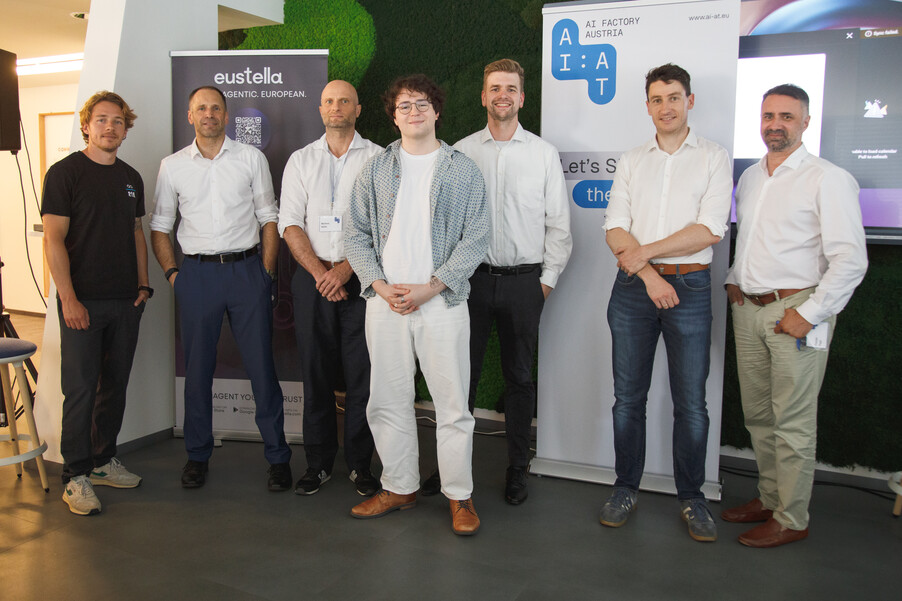
On June 25, 2026, Vienna-based startup eustella officially opened access to its autonomous AI agents platform. The event coincided not by chance with the week when the US government ordered Anthropic to disable Fable 5 and Mythos 5 models for all foreign citizens, citing national security. For millions of European users, this meant: one of the most powerful AI tools vanished literally overnight.
What is eustella and how it works
The platform operates both in a browser and in mobile applications for iOS and Android. Instead of its own model, eustella aggregates open models — Google's Gemma 4, Alibaba's Qwen, OpenAI's gpt-oss-120b and Mistral AI solutions; image generation is provided by Flux from Black Forest Labs. The key difference from competitors — all infrastructure is hosted on IONOS Cloud servers, which falls under EU jurisdiction, not the American CLOUD Act.
Two partner APIs are already integrated into the platform: cryptocurrency exchange Bitpanda provides real-time quotes, and Austrian price aggregator Geizhals — electronics recommendations. According to the founders, the list of integrations will expand.
Pricing logic: where the competitive advantage lies
The basic subscription costs €5.99 per month — one-third cheaper than OpenAI's starter plan (€7.99) and more than three times cheaper than Anthropic (from €20). There is a free tier with limited request limits.
"Anyone using AI today is mostly using black-box systems under foreign control. eustella breaks this pattern: data sovereignty and technological control remain 100% in Europe"
Matteo Rosoli, CEO eustella
The startup is developing with support from the Austrian AI Factory Austria AI:AT hub, which provides access to infrastructure and a partner network.
The market they are entering
According to McKinsey's assessment, the development of sovereign AI in Europe can generate annual GDP growth of €63 billion solely from local retention of value created by the AI ecosystem. Another €416 billion — the potential productivity gains from broader AI adoption overall. According to MarketsandMarkets, the artificial intelligence market in Europe was valued at $86.24 billion in 2025 and could reach $548 billion by 2032 at growth rates of 30.2% per year.
However, betting on sovereignty as a product — is not merely ideological: according to McKinsey's assessment, 30 to 40% of all AI spending globally by 2030 will be determined by data sovereignty requirements.
Where the weakness lies
The paradox of the platform — lies in its model stack. eustella declares European sovereignty, but the base models (gpt-oss-120b from OpenAI, Gemma from Google, Qwen from Alibaba) are developed outside the EU. The company does not publish technical documentation on exactly how "exclusively European infrastructure" ensures independence if model weights come from American and Chinese corporations. The difference between data sovereignty and model sovereignty is fundamental here — and remains unexplained so far.
If eustella truly plans to attract 100+ million users, as stated at launch, the question of whether a "fully European" platform will withstand regulatory review under the EU AI Act when using models from OpenAI and Google could prove decisive before reaching scale.