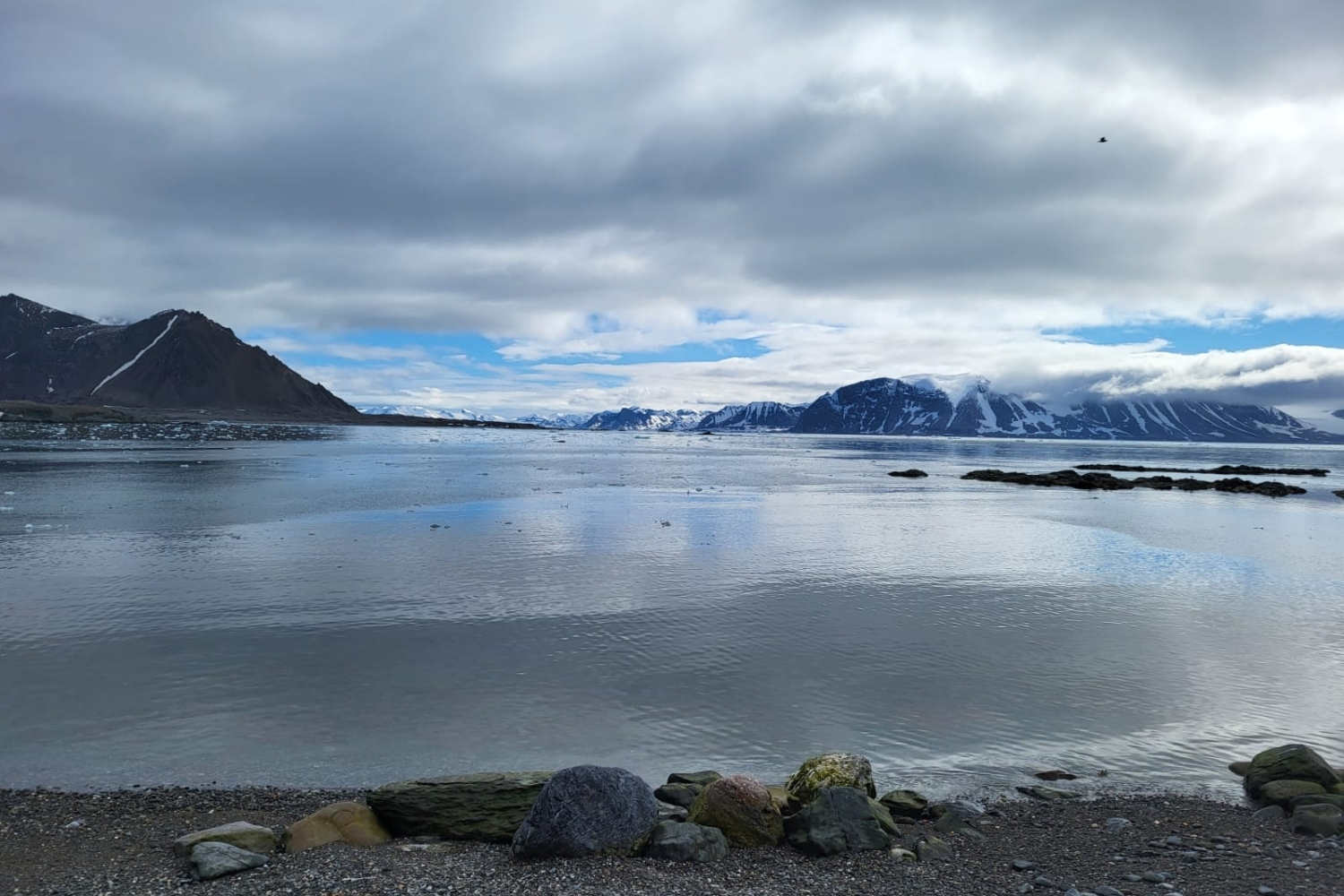
For almost thirty years, Ukraine maintained a polar presence only in Antarctica. Now the Arctic is being added to it—not through its own station, but through a partnership with Poland, which has been conducting research on Svalbard since 1957.
What was signed and where
In Warsaw, the National Antarctic Science Center (NASC) and the Institute of Geophysics of the Polish Academy of Sciences signed an agreement on joint geophysical research in 2026–2027. It will cover two locations at once: the Polish polar station "Hornsund" named after Stanisław Siedlecki on the Svalbard archipelago in the Arctic and the Ukrainian "Akademik Vernadsky" in Antarctica.
The Hornsund station has existed since 1957 and is one of the oldest operating Arctic stations in the world. Its permanent focus areas include meteorology, seismology, geomagnetism, and glaciology.
Why simultaneously at both poles
The agreement is built around specific scientific logic, which NASC Director Yevhen Dykyi formulated as follows:
"Comparing the same processes in two polar regions is key to distinguishing the global from the local and to understanding planetary processes."
Yevhen Dykyi, Director of NASC
This refers to so-called bipolar research: when the same geophysical processes are measured synchronously in the Arctic and Antarctica, scientists can distinguish local signals from global ones. This is particularly important for understanding changes in the geomagnetic field and glacier dynamics at the planetary level.
What will happen before 2026
Practical implementation begins earlier than the official timeline of the agreement. According to ZN.ua, as early as late summer 2025, Ukrainian geophysicists Yuriy Sumaruk and Anton Kushnir will head to Hornsund. Their task is to measure the components of the geomagnetic field and determine a location for installing additional scientific equipment. This is essentially a reconnaissance mission before the full campaign.
The mechanism of the agreement and its limits
The document outlines a two-year horizon—2026–2027—and does not contain a publicly announced financing mechanism or a clear list of each party's obligations. The agreement provides access but does not guarantee resources: the Polish side provides the Hornsund station infrastructure, the Ukrainian side—the Akademik Vernadsky and geophysical expertise. How exactly the costs of the field season will be distributed was not publicly clarified.
Dykyi also outlined a long-term horizon:
"The next step, of course, after Victory—our own station there."
Yevhen Dykyi, Director of NASC
This is the first public formulation of Ukraine's ambition for its own Arctic presence—for now as the director's personal position, not a declared state program.
The agreement with Poland is the second step in expanding Ukraine's polar presence in two years, following its accession to the EU project POLARIN, which provides access to polar infrastructure of other countries and over half a million euros for the Ukrainian Antarctic program.
If geophysicists Sumaruk and Kushnir confirm the suitability of the location for permanent equipment this summer, the agreement will have a technical foundation. If not, the question of financing a full field season in 2026 will remain open.







