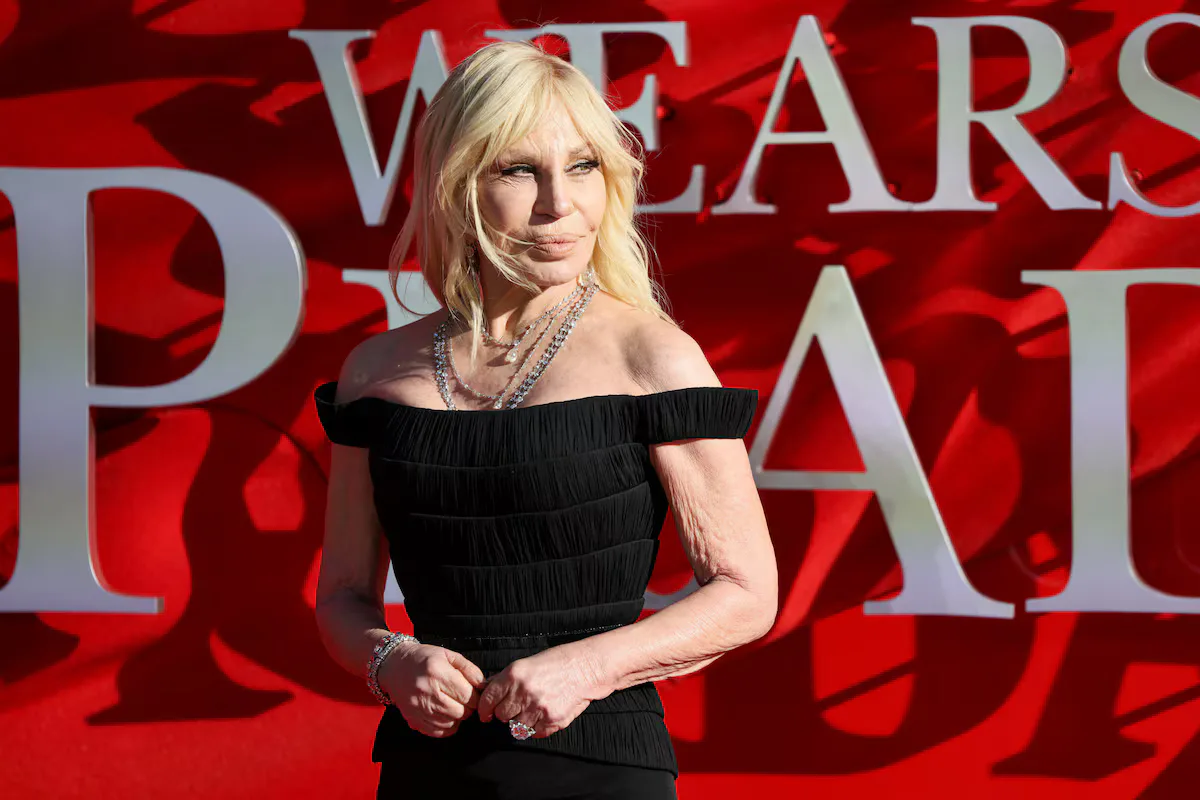
Donatella Versace spent thirty years as the face and voice of the house founded by her brother. In March 2025, she left her position as creative director of Versace — just weeks before the brand was acquired by the Prada group. Since then, she has formally remained only as an ambassador. Now she is returning to the game as co-founder and chief creative director of a new venture — jointly with American online retailer REVOLVE.
REVOLVE is not a random partner. It is a public company with sales of 1.2 billion euros last year, which has spent years building a business selling fashion and beauty to millions of Gen Z and millennial representatives through an app and social networks, rather than through fashion show events. It already has experience with similar experiments: joint brands with Cardi B and influencer Sofia Richie Grainge.
Declaration without Details
The official statement sounds ambitious: a new fashion and beauty brand built "from scratch," where Donatella gets complete creative freedom. But the press release contains no brand name, no launch date, not even a product category — except that the first products will be beauty products. Everything else, according to the company itself, "will be revealed in the coming months."
"By combining Donatella's creative authority with REVOLVE's technology, infrastructure, and global reach, we have the opportunity to create something truly unique — and build it for the long term," said REVOLVE co-founder and co-CEO Mike Karanicolas.
This is a classic diplomatic formula for a business release: intent is there, commitment is not. There are no contract terms, no investment amounts, no structure of ownership in the joint venture. There is only the promise of a platform and freedom — categories that are easy to declare and difficult to measure.
How This Should Work
The mechanism that was actually discussed publicly looks like this: Donatella is responsible for the creative side — the brand image, product, cultural context. REVOLVE takes on the commercial infrastructure — e-commerce, logistics, marketing data about the audience that the company has accumulated over two decades. The launch is planned for the United States, Latin America, Asia-Pacific, and the Middle East, starting with the beauty category, with subsequent expansion into fashion. According to separate reports, the first products and brand name are expected to appear around 2027 — meaning this is not about the next season, but rather a two-year planning horizon.
This is significantly different from how Donatella worked at Versace: there she managed an already established house infrastructure with history. Here she will have to build a brand from scratch simultaneously within a foreign operational model oriented toward digital rather than runway formats.
Prada's Silence
The most telling reaction is the absence of reaction. Prada, which now owns Versace and formally determines Donatella's status as brand ambassador, refused to comment on the news of the partnership with REVOLVE. For a company that has just completed a complex and expensive deal to acquire a competitor, silence can mean either complete indifference to the parallel project of the former creative director, or caution — a reluctance to publicly define the limits of what she is allowed to do under her ambassador contract.
The question for the next two years is simple: will this deal become a real brand with a name, product, and date on REVOLVE's shelf, or will it remain one of those loud collaboration announcements that regularly appear in the fashion industry and then quietly fade away without an official announcement of closure.